Introduction
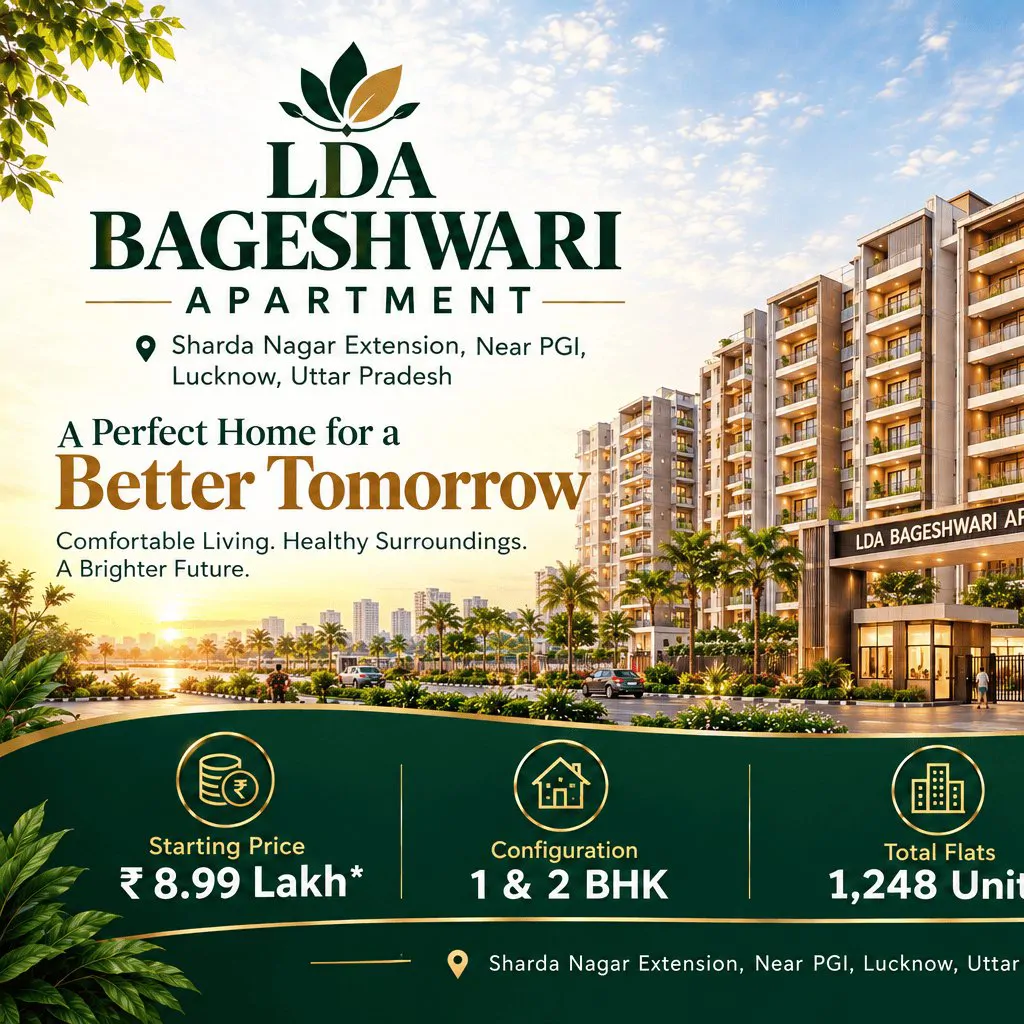
LDA Bageshwari Apartment is a proposed affordable housing development in Lucknow that may attract families looking for practical homes with access to everyday facilities. Located in Sharda Nagar Extension, near PGI, the project is planned with 1 BHK and 2 BHK housing options. For homebuyers, choosing a property is not only about the flat size or purchase price. It is also about how comfortably they can manage grocery shopping, healthcare visits, school routines, commuting, household work and other daily responsibilities. These factors play an important role in deciding whether a residential location suits long term living.
When evaluating LDA Bageshwari Apartment Lucknow, prospective buyers should look beyond the advertised features and consider how the surrounding area may support their lifestyle. Grocery access, medical services, public transport, road connectivity, waste collection, water supply and security arrangements all deserve attention. Although the proposed project information mentions facilities such as grocery stores, a medical shop, a milk booth, an ATM, a health centre and a community centre, their final availability, locations and operating arrangements need official confirmation. Understanding these practical details can help families assess whether this housing opportunity fits their present needs and future plans.
Understanding the Residential Concept of LDA Bageshwari Apartment
LDA Bageshwari is associated with the affordable housing initiative of the Lucknow Development Authority. The proposed development is intended to provide residential options for different household requirements, particularly people who want a functional home without moving into a high priced luxury housing category.
According to the available project information, the development is planned across five towers with 12 floors each, comprising a total of 1,248 residential units. The proposed housing mix includes 312 one bedroom PMAY flats and 936 two bedroom affordable flats. These figures provide an initial understanding of the project's scale, but buyers should verify the approved configuration, unit distribution, specifications and final inventory before making decisions.
A residential community of this size can create opportunities for convenient everyday living when its planning, infrastructure and management work effectively. However, the number of apartments alone does not guarantee a comfortable lifestyle. The quality of shared spaces, maintenance arrangements, internal movement, access to services and neighbourhood infrastructure will influence the actual living experience.
For families considering this development, the most useful question is simple: Will the home and its surroundings make daily life easier? Answering that question requires a closer look at grocery shopping, essential services, transport, household routines and the facilities planned within the community.
Why Daily Lifestyle Planning Matters Before Buying a Flat
Homebuyers often focus on the purchase amount, carpet area, floor selection and payment schedule. These factors are important, but daily lifestyle planning deserves equal attention. A home that appears affordable initially may become less practical if residents must travel long distances for basic needs or spend significant time handling everyday tasks.
Working professionals need predictable travel arrangements. Parents need manageable school journeys and access to healthcare. Senior citizens may prefer nearby medical assistance, comfortable walking areas and convenient access to essential shops. Small families may value a manageable home layout, while larger households may require additional storage, privacy and flexible living spaces.
When assessing Affordable Flats in Lucknow, buyers should calculate the practical cost of living rather than focusing only on the initial flat price. Regular travel, grocery deliveries, school transport, medical expenses, maintenance charges, electricity consumption and household support can affect the monthly budget.
The proposed location and internal facilities of a housing development may help address some of these requirements. Nevertheless, buyers should evaluate the actual surroundings and confirm which amenities will be available at possession and which may depend on future development.
LDA Bageshwari Apartment Sharda Nagar Extension: Understanding the Location
LDA Bageshwari Apartment Sharda Nagar Extension is described as being near PGI in Lucknow. This location reference can help buyers begin their neighbourhood assessment, particularly if they work, study, or have regular appointments in nearby areas.
However, the phrase near PGI should not be treated as proof of a specific walking distance or travel time. The exact project entrance, route conditions, traffic patterns, road access and transport availability must be checked separately.
For practical location planning, buyers should identify the nearest functioning grocery stores, pharmacies, hospitals, schools, banks, public transport stops and daily use markets. Mapping these destinations from the actual project entrance is more useful than relying on broad locality descriptions.
Families should also check whether the approach roads remain comfortable during busy hours. A route that looks convenient on a map may involve traffic congestion, difficult crossings, limited footpaths, or additional travel time.
Visiting the neighbourhood at different times can reveal useful information about traffic, street lighting, commercial activity, noise levels, road conditions and general movement. If the project is not yet occupied or fully developed, buyers should also assess whether the surrounding infrastructure is operational rather than assuming future improvements will happen within a particular timeframe.
Grocery Access: A Major Part of Comfortable Residential Living
Grocery shopping is one of the most frequent household activities. Milk, vegetables, fruits, flour, rice, cooking oil, spices, cleaning products and personal care items are regular purchases for most families.
Convenient access to these essentials can save time and reduce transportation expenses. For residents of a large housing community, the availability of everyday retail services can make a meaningful difference to their routine.
The proposed project amenities include grocery stores and a milk booth. These facilities could support daily convenience if they are delivered, appropriately located and operated with suitable timings and product availability.
At the same time, proposed amenities should not be treated as existing shops. Buyers should request the latest approved amenity plan and confirmation regarding the availability, construction status, allocation and management of these commercial facilities.
What Families Should Check About Grocery Stores
Before selecting a flat, buyers should identify the closest operational grocery shops outside the development. They should compare walking distance, road safety, product selection, prices and opening hours.
A small neighbourhood shop may be useful for urgent purchases, while a larger market may offer better variety and monthly shopping options. Both can serve different purposes in a household's shopping routine.
Families should also consider whether older residents can reach these shops comfortably. Uneven pavements, busy roads, poor lighting, or a lack of safe crossings can make a short journey difficult.
Another consideration is the availability of fresh produce. Buyers who regularly purchase fruits and vegetables may prefer access to vendors or markets that provide dependable quality and reasonable choice.
These details should be checked through personal visits rather than assumptions about the neighbourhood.
Planning a Weekly Grocery Routine
A practical grocery routine can reduce unnecessary travel and household expenses. Families can divide shopping into daily essentials, weekly fresh produce and monthly packaged goods.
Milk and bread may require frequent purchases, while staples and cleaning supplies can often be bought less regularly. Organising these purchases around work schedules and school timings can save time.
Residents should also consider the convenience of carrying shopping bags from a nearby store to their building. The availability of lifts, ramps, suitable entrances and safe internal pathways can influence the overall experience.
If grocery delivery services operate in the area, residents may find them helpful during busy workdays or periods of bad weather. However, delivery coverage should be checked using the actual project address. Service availability, delivery charges, minimum order requirements and delivery hours can differ between providers.
Daily Essentials: Milk, Vegetables, Household Products and More
A comfortable residential environment supports more than major shopping requirements. Many households need quick access to small but important items throughout the week.
The proposed milk booth at the development could be useful for residents if it becomes operational. Buyers should check its planned location, expected operating hours, supply arrangements and whether it will be managed by a designated vendor or another operator.
Fresh vegetable access also deserves attention. A nearby market or dependable local vendor can make it easier to maintain regular household shopping without planning long journeys.
Families with children may need stationery, school supplies, snacks and basic personal care products. Working residents may value nearby laundry, tailoring, repair, or other everyday services.
These services are not all confirmed project amenities. They should be considered part of a neighbourhood checklist, not guaranteed features of the proposed development.
Residents can also evaluate the availability of digital payment options, home delivery, safe pickup points and convenient parking near shops. These practical features may improve daily shopping, especially for families with limited free time.
Medical Facilities and Healthcare Planning
Healthcare access is an important part of residential decision making. A nearby medical shop can help residents obtain commonly required products, while hospitals and clinics serve different healthcare needs.
The proposed amenities for LDA Bageshwari Apartment mention a medical shop and a health centre. Their final scope, availability, staffing, operating hours and service arrangements need to be confirmed through official project information.
A proposed health centre should not automatically be considered a fully equipped hospital, emergency department, or round the clock medical facility. Buyers should understand precisely what healthcare support is planned.
Checking Nearby Hospitals and Clinics
Families should identify hospitals, clinics, diagnostic centres and pharmacies that are currently operating around the project. They should compare route distance, traffic conditions, appointment availability and emergency access.
For regular consultations, a nearby clinic may be sufficient. Serious medical emergencies require a different level of planning, including access to appropriate hospitals and emergency transport.
Buyers should test travel routes during normal and peak traffic conditions. They should also identify more than one route where possible, particularly if road congestion can affect access.
For households with senior citizens, children, or members who need regular medical appointments, healthcare accessibility may be a major factor in choosing a home.
Pharmacy Access and Basic Medical Needs
Pharmacy access is useful for routine purchases, prescribed medicines and basic healthcare products. However, medicine availability should never be assumed simply because a medical shop is proposed.
Residents should check whether nearby pharmacies operate during evenings, weekends and public holidays. They may also review legitimate medicine delivery options, where available.
Emergency preparedness should include keeping important medical records, emergency contact numbers and necessary supplies accessible. Residents should not depend entirely on a future project facility for urgent healthcare needs.
Schools, Childcare and Family Friendly Daily Routines
Families with children need a residential location that supports predictable school routines. Travel time, school transport, road safety, pickup arrangements and access to childcare services can affect daily schedules.
The proposed project information mentions an Anganwadi facility. This could support community level childcare or related services if it is delivered and operates according to the applicable arrangements.
Parents should confirm the intended function, eligibility, operational status and service timings of any proposed childcare facility. An Anganwadi should not be confused with a private preschool or full day daycare centre.
Families should independently research schools in the surrounding area. Important considerations include admission availability, teaching approach, school timings, fees, transportation and the route between home and school.
Parents should also consider whether children can safely walk within the residential premises. Vehicle movement, basement access, play areas, staircase safety and the separation of pedestrian and vehicular routes deserve attention.
A well planned daily routine becomes easier when school transport, grocery shopping, work schedules and household responsibilities can be managed without unnecessary travel.
Transport Connectivity and Everyday Commuting
Transport planning affects the cost and comfort of daily life. Residents may travel for employment, education, medical appointments, shopping, or family commitments.
When evaluating the proposed development, buyers should check the actual access roads, available public transport, nearest operational stops, auto rickshaw availability and cab pickup arrangements.
General location references do not establish exact connectivity. Buyers should verify the nearest usable routes and operating transport services independently.
Planning Workday Travel
Working professionals should estimate their daily travel time during realistic commuting hours. A route that takes little time during the afternoon may become slower during morning and evening peaks.
People using personal vehicles should consider fuel expenses, parking availability, road conditions and possible congestion. Residents using public transport should examine service frequency, walking routes, interchange requirements and the cost of the complete journey.
For people working flexible or hybrid schedules, access to reliable internet and a comfortable home workspace may be as important as transport connectivity.
Buyers should avoid making decisions based only on projected roads, planned transit links, or future infrastructure announcements. Such developments can change in scope and timing.
Walking, Cycling and Short Distance Travel
Some daily journeys are short enough to complete on foot or by bicycle. However, this depends on safe routes, pedestrian infrastructure, lighting, road crossings and weather conditions.
Buyers should examine whether the surrounding streets support comfortable movement for children, older adults and people with mobility challenges.
Within the development, the location of lifts, staircases, entrances, parking areas and common facilities may influence the ease of movement.
Practical access is especially important for residents carrying groceries, pushing strollers, or using mobility aids.
Understanding the Proposed Community Amenities
The available project details describe several proposed facilities that may support daily living. These include a health centre, Anganwadi, community centre, grocery stores, medical shop, milk booth, ATM, security arrangements, waste management, sewage treatment, drainage and landscaped gardens.
These features suggest an intention to provide a practical residential environment. Their value, however, depends on implementation, design quality, maintenance and actual usage.
Community Centre and Shared Activities
A community centre can provide a common space for meetings, celebrations, resident interactions, or organised activities, depending on its approved purpose and management rules.
For families, such a facility may encourage social interaction and create opportunities for neighbours to build relationships.
Before buying, residents should confirm the centre's proposed size, facilities, access arrangements, booking rules and maintenance responsibilities.
Community facilities work best when residents understand how shared spaces will be managed and how noise, events, cleaning and operating hours will be controlled.
Landscaped Gardens and Outdoor Comfort
Landscaped gardens can improve the visual appeal of a residential environment and provide space for relaxation. Depending on the final design, residents may use these areas for quiet walks, informal conversations, or outdoor breaks.
Buyers should review the approved landscape plan rather than assuming that every tower will have equal access to green spaces.
Drainage, shade, seating, lighting, maintenance and accessibility affect the usefulness of outdoor areas. In Lucknow's seasonal climate, shaded pathways and effective rainwater drainage may be particularly relevant.
Families should also check whether children's activity areas, if proposed, are separated appropriately from vehicle movement and other safety risks.
ATM Access and Banking Convenience
The proposed amenity list mentions an ATM. If delivered and operational, this facility could reduce the need for certain cash withdrawal trips.
Buyers should confirm whether the ATM is planned within the premises, whether a service provider has been appointed and whether the facility will be available from the beginning of occupancy.
Residents should also identify nearby bank branches, cash withdrawal options and digital payment alternatives. Banking access may be particularly important for older residents and households that regularly require cash.
Waste Management, Cleanliness and Hygiene
Waste management plays a major role in residential comfort. A large apartment community produces household waste every day, including food waste, packaging, paper, plastic and other materials.
The proposed development information includes waste management arrangements. Buyers should request details about collection points, collection schedules, waste segregation, disposal methods and the agency responsible for operations.
Effective waste management can help maintain cleaner common areas and reduce unpleasant smells, pest problems and avoidable hygiene concerns.
Residents should understand their responsibilities regarding waste segregation and disposal. A well maintained community depends on both management systems and household participation.
Questions About Cleaning and Maintenance
Prospective buyers should ask how often common areas will be cleaned and how complaints will be handled. They should also understand who will manage lift maintenance, lighting, drainage, security equipment and shared facilities.
Maintenance costs deserve special attention. A lower initial property price does not necessarily mean lower ongoing expenses.
Buyers should request the estimated maintenance charges, the services included, the payment schedule and the rules for future revisions.
Clear maintenance arrangements can help residents plan their monthly budgets and understand what level of service they can reasonably expect.
Water Supply, Drainage and Sanitation Planning
Reliable water supply and sanitation are fundamental requirements for comfortable living. They influence cooking, bathing, cleaning, laundry and general household hygiene.
The proposed project details mention drainage and a sewage treatment plant. These are important infrastructure components, but their inclusion in preliminary information does not confirm operational performance or final capacity.
Buyers should ask about the planned water source, storage capacity, supply arrangements, treatment systems, sewage connections and responsibility for operation and maintenance.
It is also useful to understand how the development will manage water during peak demand and how interruptions will be communicated to residents.
During a site visit, buyers can review visible infrastructure progress where accessible and request approved technical details through the appropriate channels.
Rainwater management is another practical consideration. Heavy rainfall can affect access roads, parking areas, basements, pedestrian paths and landscaped spaces if drainage is inadequate.
Residents should review the approved drainage provisions and understand the arrangements for stormwater management rather than relying only on the appearance of the property during dry weather.
Security, Access Control and Resident Safety
Security arrangements influence how comfortably residents use their homes and shared spaces. The proposed amenities mention security, but the final system and its scope require confirmation.
Buyers should ask whether the development will have controlled entry points, visitor registration, security personnel, CCTV coverage in permitted common areas, emergency contact arrangements and procedures for handling incidents.
Security planning should balance safety with resident privacy. The placement and management of surveillance systems should follow applicable rules and clearly communicated policies.
Families should also examine fire safety provisions, emergency exits, evacuation routes, fire fighting systems, lift safety and access for emergency vehicles.
For a multi storey residential development, fire safety documentation and the required approvals are particularly important. Buyers should verify the relevant compliance requirements and available certificates instead of assuming that a proposed building will automatically meet every standard.
Good safety planning includes regular maintenance, clear emergency communication, accessible exits and resident awareness.
Choosing Between 1 BHK and 2 BHK Homes
The proposed housing mix includes one bedroom and two bedroom apartments. Selecting the right configuration depends on household size, income, daily routines, privacy needs and future plans.
The most suitable home is not always the largest available unit. Buyers should consider how they use space and whether the layout supports comfortable daily living.
Who May Consider LDA Bageshwari Apartment 1 BHK?
LDA Bageshwari Apartment 1 BHK may be worth evaluating for eligible individuals, couples, or smaller households who prefer a compact living arrangement.
A one bedroom home may help manage the initial purchase budget and reduce the amount of space that requires furnishing and maintenance. However, buyers should carefully examine the actual layout, storage options, kitchen design, ventilation and bathroom arrangement.
Households that work from home may need to consider whether a separate workspace is possible. Families expecting changes in household size should also think about their future space requirements.
The available project information identifies the proposed one bedroom units as PMAY flats, with an indicative starting price of ₹8.99 lakh. Buyers should confirm the actual eligibility criteria, unit area, price components and allocation conditions.
Who May Consider LDA Bageshwari Apartment 2 BHK?
LDA Bageshwari Apartment 2 BHK may offer more flexibility for small families, couples planning for children, or households that need an additional room.
An extra room can support different needs, such as a child's bedroom, a guest room, a study, or a home office. Its usefulness depends on the actual room dimensions and the apartment's layout.
Families should review the relationship between bedrooms, the living area, kitchen, bathrooms, balconies and storage spaces. A practical floor plan can improve daily movement and make household responsibilities easier to manage.
The proposed two bedroom affordable homes are listed with an indicative starting price of ₹34.82 lakh. This figure should not be treated as a final quotation or a complete estimate of the total purchase cost.
LDA Bageshwari Apartment Floor Plan: What to Review
The LDA Bageshwari Apartment Floor Plan is an important document for understanding the actual usability of a home. A configuration label such as one bedroom or two bedroom does not explain everything about its design.
Buyers should review the approved floor plan, carpet area, built up area where relevant, room dimensions, door positions, window placement, ventilation and available storage.
Kitchen usability is especially important for households that prepare meals at home. Buyers can examine countertop space, ventilation, appliance placement and movement between the kitchen and dining area.
Bathroom design, plumbing locations, natural light and privacy should also be considered. Families may benefit from understanding whether furniture can be arranged without blocking circulation space.
Where possible, buyers should compare the marketing plan with the approved plan and the final allotment documents. Any changes in layout or specifications should be reviewed carefully.
Residents should also understand the tower's common circulation areas, lift access, staircase locations, parking arrangements and distance from the apartment entrance to shared facilities.
These details influence the experience of daily living more directly than promotional descriptions alone.
Daily Household Planning for Working Professionals
Working professionals often need a home that supports a busy routine. Morning preparation, commuting, meal planning, laundry, online deliveries and evening rest can all become easier when the home is organised well.
Before buying, residents should consider whether the apartment offers sufficient storage for work equipment, clothing, household supplies and groceries.
A separate work corner may be helpful for people working remotely. They should assess natural light, ventilation, noise levels, electrical points and internet service availability.
Internet connectivity should be checked with providers serving the exact address. Buyers should not assume that every service provider will cover a proposed development immediately.
Residents may also want to plan delivery instructions, visitor access and a safe place for receiving essential household items.
For people with long workdays, nearby grocery access and reliable transport can be particularly valuable. These practical advantages can reduce the amount of time spent on routine errands.
Planning for Senior Citizens and Different Mobility Needs
Residential convenience means different things to different age groups. Older residents may prioritise lift reliability, comfortable walking routes, nearby medical support, seating areas and easy access to essential services.
Buyers should examine whether the building entrances, common corridors, ramps, lifts and other shared spaces support residents with mobility limitations.
They should also check the availability of handrails, non slip surfaces, accessible routes and suitable emergency arrangements where applicable.
Grocery access is especially relevant for residents who prefer walking short distances rather than travelling by vehicle. However, a nearby shop is only useful when the route is reasonably safe and manageable.
Families living with senior citizens should consider the location of the apartment within the tower, access to lifts, emergency communication and the practical distance to the entrance.
These details can influence long term comfort and should be evaluated alongside affordability.
Affordable Living: Understanding the Complete Household Budget
Affordable Apartments in Lucknow can appeal to buyers who want to balance homeownership with other financial responsibilities. Still, affordability should be measured through the total cost of ownership rather than the starting price alone.
The proposed LDA Bageshwari Apartment Price details list one bedroom PMAY flats from ₹8.99 lakh and two bedroom affordable flats from ₹34.82 lakh. These are indicative figures from the available project information and require official verification.
The final payable amount may depend on the selected unit, applicable charges, taxes, documentation, registration expenses and other terms. Buyers should obtain a complete written cost sheet before committing funds.
Monthly expenses may include maintenance, electricity, water charges where applicable, internet, transport, groceries, school fees and healthcare costs.
Households should compare these expenses with their regular income and existing financial commitments. A realistic budget can help prevent unnecessary financial pressure after possession.
Planning Grocery and Household Expenses
Food expenses vary based on household size, eating habits, shopping preferences and the frequency of home cooking.
Families can estimate a monthly grocery budget by reviewing their present spending and adjusting it for any expected changes after moving.
Buying essential items in planned quantities, comparing local prices and reducing food waste can support better budget management.
However, savings should not depend on the assumption that a proposed grocery store will offer lower prices than outside retailers.
Residents should compare actual prices and service convenience after the relevant shops become operational.
PMAY and Affordable Housing Considerations
The proposed development information associates some one bedroom units with PMAY. This makes eligibility and scheme conditions important subjects for prospective applicants.
PMAY Flats Lucknow may attract attention from households exploring government supported affordable housing options. However, a project reference to PMAY does not automatically establish that every buyer qualifies for financial assistance.
PMAY Affordable Housing Lucknow applicants should confirm the applicable scheme version, beneficiary category, income limits, household conditions, documentation and benefit availability through official channels.
The available project material refers to a subsidy of up to ₹2.5 lakh, subject to eligibility and scheme conditions. This amount should not be assumed to be universally available, automatically deducted from the flat price, or guaranteed for every applicant.
Scheme benefits can depend on the applicable rules, funding provisions, implementation process and individual circumstances. Applicants should obtain current written guidance before making financial calculations based on a subsidy.
Buyers should also confirm whether the particular unit and project are covered under the relevant scheme and whether the intended benefit is currently open to applications.
Government Housing and Other Residential Options in Lucknow
People researching Government Flats in Lucknow often compare several housing options before making a decision. Their priorities may include affordability, location, transport, possession timelines, eligibility and construction quality.
LDA Flats Lucknow may be relevant to households exploring developments associated with the Lucknow Development Authority. However, individual projects can differ significantly in location, unit sizes, pricing, approval status and allocation conditions.
The broader list of Lucknow Development Authority projects can provide a starting point for understanding available housing opportunities, but current project status and application details should always be checked from official sources.
Buyers researching Lucknow Development Authority flats should compare project specific documents instead of assuming that all developments follow identical eligibility or payment rules.
The term LDA Housing Scheme Lucknow may cover different housing initiatives or project categories. Applicants should identify the exact scheme, application period and governing terms relevant to their preferred property.
Other project names that buyers may encounter during their research include LDA Aditi Apartment, LDA Aishbagh Square and LDA Park View Apartment. Their present availability, specifications, pricing and eligibility requirements should be verified independently before making comparisons.
Some buyers may also review housing opportunities associated with UP Awas Vikas Parishad. The appropriate comparison should focus on current official project details rather than broad assumptions about public sector housing.
When comparing LDA projects Lucknow, buyers should evaluate the approved location, total cost, possession schedule, project registration, infrastructure and practical lifestyle requirements.
LDA Affordable Housing Scheme: What Applicants Should Understand
The LDA Affordable Housing Scheme can be a useful search topic for households exploring housing opportunities associated with the authority. However, scheme specific conditions are essential.
Applicants should check the official notice for eligibility, application deadlines, required documents, payment procedures, allotment methods, refund policies and any restrictions on transfer or resale.
They should also establish whether the project is proposed, launched, open for applications, under construction, or ready for possession.
These stages are not interchangeable. A proposed housing project may have a different level of certainty from a project with completed approvals and an active allotment process.
Buyers should not make payments based only on unofficial messages, promotional advertisements, or verbal promises.
Any payment should follow the authorised procedure, with a verifiable receipt and clear documentation.
LDA Bageshwari Apartment Registration: Planning Before Applying
LDA Bageshwari Apartment Registration is an important topic for prospective applicants, but the available project information describes registration related details as requiring confirmation.
Applicants should verify whether the registration window has officially opened, which categories are eligible, what documents are required and whether the application process is online, offline, or follows another authorised method.
They should also confirm the registration fee, booking amount, payment stages, cancellation conditions, allotment process and refund terms.
Buyers should avoid treating an expected registration schedule as a confirmed announcement. Dates, eligibility conditions and application procedures may change.
Before applying, households should prepare the documents specified in the official notice. Depending on the applicable requirements, these may include identity documents, address proof, income information, photographs and other supporting records.
Applicants should submit only the documents requested through the authorised process and protect sensitive personal information.
Where the project is associated with an affordable housing or beneficiary scheme, applicants should separately confirm whether additional declarations or eligibility evidence are necessary.
Project Status, RERA and Possession: Important Checks
The available project information describes the development as proposed and lists its RERA status as under process. This is a significant consideration for prospective buyers.
Before making a purchase decision, buyers should verify the current status through the relevant official authority and applicable registration records.
They should establish whether the project requires registration under the applicable real estate regulations and whether the relevant registration has been completed.
Where registration is required, buyers should review the registration details, approved plans, declared completion timeline and other disclosures available through official records.
The available material also lists possession as to be announced. Therefore, buyers should not assume a specific handover date.
They should request written information about the proposed construction schedule, project milestones, possession terms and the process for communicating delays or changes.
One part of the available project material refers to a foundation stone ceremony in September 2026, while the development is also described as proposed. This should be independently verified, including the actual project commencement status and the scope of any work completed.
Such verification helps buyers distinguish between announcements, planned development, construction activity and legally relevant project milestones.
How a Large Residential Community Can Influence Everyday Life
A proposed development with 1,248 homes may create a substantial residential community. This scale can support demand for shared services, local retail, maintenance operations and community activities.
At the same time, a large number of households can increase pressure on lifts, parking, water supply, waste collection, access roads and common facilities if these systems are not planned and managed appropriately.
Buyers should examine the approved infrastructure capacity and understand how common facilities will be shared among residents.
For example, the number of lifts, their capacity and maintenance arrangements can influence daily movement in a multi storey building.
Parking arrangements also deserve attention. Residents should confirm whether parking is allotted, included, chargeable, or governed by another documented arrangement.
Visitors, delivery vehicles, service personnel and emergency vehicles also require practical access.
Good planning should support daily convenience without creating avoidable congestion around entrances and shared spaces.
Neighbourhood Convenience and Local Services Planning
A home becomes more practical when the surrounding neighbourhood supports common household needs. Buyers should prepare a simple location assessment covering essential services and regular destinations.
They can identify grocery shops, pharmacies, healthcare facilities, schools, banks, public transport, fuel stations and other relevant services on a map.
Each destination should be checked for current operation, actual route distance, accessibility and opening hours.
For families that depend on delivery services, checking address coverage is useful. Some service providers may operate in one part of an area but not another.
Residents should also understand local street conditions, waste collection arrangements, drainage, road lighting and the availability of safe pedestrian routes.
These checks provide a more realistic picture of daily living than a general statement that a residential property is well connected.
Environmental Comfort, Noise and Neighbourhood Conditions
Residential comfort depends on more than indoor design. Outdoor conditions such as traffic noise, dust, street activity, construction work and weather can affect daily life.
Buyers should visit the locality during different hours to understand how the surroundings change throughout the day.
They should pay attention to traffic near the entrance, commercial activity, nearby construction, drainage conditions and the availability of shaded walking routes.
Apartment orientation and ventilation can also influence indoor comfort. Buyers should examine window positions, natural light, airflow and exposure to noise where the approved plans and site conditions allow.
Green spaces can contribute to a pleasant environment, but their practical value depends on the final landscape design and ongoing maintenance.
For families planning long term occupancy, these details can be as important as the apartment's initial appearance.
Is LDA Bageshwari Apartment Suitable for First Time Homebuyers?
First time homebuyers often need clear information about affordability, eligibility, documentation and the actual responsibilities of homeownership.
The proposed project may be worth evaluating for buyers who are interested in an affordable residential option in Lucknow. Its suitability will depend on the confirmed pricing, unit configuration, location, approval status and household requirements.
First time buyers should avoid stretching their budgets to secure a property that does not match their practical needs.
They should compare the complete acquisition cost with their savings, loan eligibility, expected monthly instalments and emergency reserves.
They should also consider how long they plan to stay in the home. A compact apartment may work well for a smaller household today, but future family requirements can influence its long term suitability.
Reviewing these questions before applying can help buyers make a more informed choice.
Who Should Consider This Proposed Housing Development?
The development may interest eligible households looking for an affordable apartment with practical access to everyday services. People working or managing responsibilities in Lucknow may want to evaluate the location according to their regular travel routes.
Smaller households may examine the proposed one bedroom configuration, while families needing additional space may consider the two bedroom option.
However, no configuration should be considered suitable for everyone. Household income, eligibility, flat size, family structure, accessibility needs and the final price all matter.
Buyers should also consider whether the project's development stage fits their housing timeline. People who need immediate possession may find a proposed development unsuitable until construction and handover arrangements become clear.
Applicants seeking an investment should assess rental demand, purchase costs, holding expenses, resale restrictions where applicable and the risks associated with project delays.
Future appreciation or rental income should never be treated as guaranteed.
Common Mistakes to Avoid When Evaluating the Project
One common mistake is assuming that every advertised amenity will be available from the first day of occupancy. Proposed facilities may be subject to approval, construction, vendor arrangements, or operational planning.
Another mistake is relying on starting prices without checking the complete cost sheet. The lowest advertised price may relate to a particular unit or category and may not represent the total amount payable.
Buyers should also avoid confusing the proposed registration schedule with an official application opening.
Location descriptions should be checked against actual routes and future infrastructure should not be treated as operational infrastructure.
Some buyers focus only on the flat's internal appearance and overlook water supply, drainage, parking, fire safety, maintenance charges and building access.
Finally, applicants should not depend entirely on informal agents or social media claims. Project status, eligibility, pricing, payment instructions and approvals should be verified through appropriate official documents.
Practical Homebuying Checklist for Daily Lifestyle Planning
Before deciding on a unit, buyers should review the proposed project's latest official status, approved plans, relevant registration information, unit specifications and complete price details.
They should check the nearest operational grocery shops, medical facilities, schools, banks and public transport services. The route should be evaluated under realistic travel conditions.
The apartment itself should be assessed for layout, natural light, ventilation, storage, accessibility and practical furniture placement.
Buyers should also ask about the availability and management of the proposed community facilities, including grocery stores, the medical shop, milk booth, health centre, Anganwadi, community centre, ATM, gardens and security arrangements.
Infrastructure checks should cover water supply, sewage treatment, drainage, waste management, lift operations, fire safety and parking.
Financial planning should include the total purchase amount, applicable charges, loan expenses, monthly maintenance, transport, groceries and other recurring household costs.
Finally, applicants should confirm the registration procedure, eligibility rules, payment schedule, cancellation terms and possession conditions before making commitments.
Frequently Asked Questions
1. Can residents expect to buy groceries inside LDA Bageshwari Apartment?
The proposed project amenities mention grocery stores and a milk booth. However, their final availability, location, operating hours and vendor arrangements need confirmation. Buyers should also identify existing shops outside the development as an alternative.
2. Will the proposed health centre provide emergency hospital services?
The available project information mentions a health centre but does not establish that it will operate as a hospital or emergency department. Residents should confirm its intended services, operating hours, staffing and medical facilities. Nearby operational hospitals should be identified separately.
3. What should a family check before choosing a flat for daily convenience?
Families should review the floor plan, storage, ventilation, lift access, grocery availability, school routes, healthcare access, transport options and recurring expenses. They should also consider the needs of children, older family members and anyone with mobility requirements.
4. Does the proposed community centre guarantee regular activities for residents?
No. A community centre is mentioned in the proposed amenity details, but the actual activities, operating arrangements, management rules and availability have not been established. These details should be confirmed before buyers rely on the facility.
5. How can buyers estimate their monthly expenses after moving?
Buyers can prepare a household budget that includes groceries, electricity, water charges where applicable, internet, transport, maintenance, medical expenses and school related costs. They should use realistic local estimates and obtain the project's current maintenance information wherever available.
6. What happens if a proposed grocery store or medical shop is delayed?
Residents may need to depend on operational shops outside the development or available delivery services. Buyers should understand the project's amenity commitments and verify the relevant documentation rather than assuming that every facility will open at a particular time.
7. Is the project appropriate for someone who needs a home immediately?
The available information describes the project as proposed and lists possession as to be announced. A buyer who requires immediate housing should not assume that the development is ready for occupancy. Current construction status, approvals and possession details must be verified.
8. How can residents check whether grocery delivery is available at the project?
Residents can check delivery coverage using the exact project address once it is recognised by service providers. They should confirm delivery timings, charges, order minimums and the availability of safe delivery and collection arrangements.
9. Are the proposed one bedroom and two bedroom homes suitable for work from home arrangements?
Suitability depends on the actual carpet area, room layout, internet coverage, ventilation, noise levels and available workspace. Buyers should assess how a desk, storage and household activities can fit into the apartment without making the living area uncomfortable.
10. What is the most important daily lifestyle check before applying?
Buyers should confirm that the property fits their budget, housing timeline and everyday travel requirements. They should then verify the project's legal and development status, approved unit details, infrastructure and proposed amenities before making any financial commitment.
Planning a Comfortable Everyday Life at LDA Bageshwari Apartment
LDA Bageshwari Apartment Lucknow may offer an affordable housing opportunity for eligible households looking for a practical residential option in the city. Its proposed one bedroom and two bedroom configurations, along with planned community amenities, make it relevant for buyers who value functional living arrangements.
The proposed grocery stores, milk booth, medical shop, health centre, Anganwadi, community centre, ATM, security, waste management, drainage, sewage treatment and landscaped gardens could support daily convenience if they are delivered and managed effectively. Their final scope and operational availability remain important points to verify.
For prospective residents, grocery access, medical facilities, transport, school journeys, water supply, safety, maintenance and the total household budget should form part of the decision making process. These practical considerations help establish whether the development is suitable for everyday life rather than simply attractive on paper.
Read More Projects : Hiranandani Plots Nagpur is an upcoming premium residential plotted development by Hiranandani Group. Designed as a well planned gated community, it offers residential plots, modern infrastructure, landscaped spaces, lifestyle amenities and the flexibility to create your dream home in Nagpur.